Huawei sets out evolution of Fibre to the Room at Africa Tech Festival 2025
By Staff Writer 18 November 2025 | Categories: news
Related Articles
 Preparing Africa’s data centres for the demands ...
 South Africa has more graduates than ever, so why ...
 GirlCode calls for applications to 2026 Pan-Africa...
Last year saw the introduction of Huawei’s Fibre to the Room (FTTR) in South Africa, which has now come to fruition through Openserve’s recent launch of FTTR solutions. However, for Huawei, FTTR is evolving, with the company showcasing new offerings at a specially fitted house in Tamboerskloof, Cape Town, during this year’s Africa Tech Festival.
Huawei believes the next stage of fixed broadband in Africa will allow operators to turn basic fibre lines into comprehensive digital platforms for both homes and small businesses.
As the name states, FTTR extends the fibre connection beyond the main router, running it from the main access point into every room through adhesive fibre cable. For households and SMEs which demand pervasive, high-speed Wi-Fi, or struggle with dead Wi-Fi zones, FTTR can be a godsend.
Huawei notes FTTR supports consistent connectivity, smart-home applications, plus new value-added services that operators can package into simple, managed offerings.
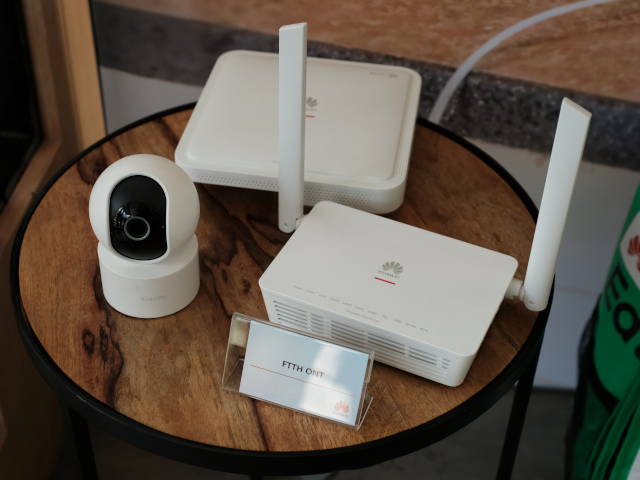
SME FTTR offer value added services
This year, Huawei introduced FTTR solutions for SMEs, showcasing an FTTR-based all-in-one device that merges connectivity with local digital services. This allows operators to offer services to SMEs on a single fibre broadband platform, which includes integrated services such as:
- On-site storage: On device storage for photos and video, with data remaining within the premises, not the public cloud.
- Workforce tools: Basic attendance and staff tracking can be layered onto the same device.
- Business applications: The solution supports integration with point-of-sale and other business applications through partner ecosystems.
Huawei notes for small retailers or cafés, this can mean one monthly service from the operator which cover both connectivity and core digital tools, eliminating the complexity of managing multiple technology vendors.
Companion app, new home solutions
The company positioned rising expectations around Wi-Fi reliability as the main driver for FTTR. With transparent fibre running along walls and discreetly into each room, compact access points provide localised, stable Wi-Fi through a small Sub FTTR Wi-Fi transmitting device. According to Huawei, the fibre is barely noticeable once fitted, which allows operators to upgrade premises without altering their appearance.
The company emphasised that FTTR is not just a physical upgrade. A companion customer app aims to give households/ companies full visibility of their network. Users can view every connected device, change Wi-Fi names and passwords and activate guest Wi-Fi instantly. If a connection feels slow, the app can run a quick diagnostic before a customer calls support.
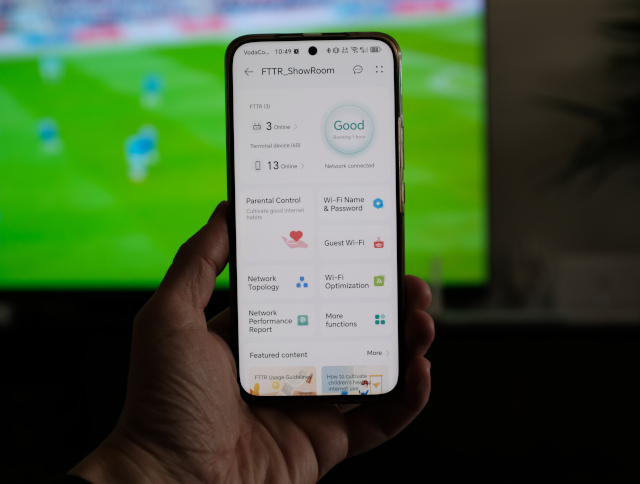
Interestingly, Huawei notes its Wi-Fi sensing capabilities can interpret disturbances in wireless signals to detect movement patterns, which could underpin new home security and automation features. The company also demonstrated a companion television solution which converts 2D YouTube videos into 3D, requiring special 3D glasses to be worn. And, much like the SME solution, each member of the household has access to on-site storage for documents, videos and photos, with this data not leaving the premises.
Deeper oversight of fibre infrastructure
FTTR requires dense deployment of passive fibre components and Huawei acknowledged that maintaining this infrastructure can be a challenge. For this reason, the company showcased a Geographic Information System-based fibre management platform designed to give operators clearer oversight.
It allows technicians to record GPS coordinates, photos and port data for passive boxes by scanning QR codes on site. All information feeds into a live map showing where fibre cores are in use. AI assisted analysis then helps pinpoint likely locations of fibre cuts which Huawei claims can significantly reduce fault finding times and unnecessary field visits.
For Huawei, FTTR is not simply an infrastructure upgrade, with the company seeing it is a platform that allows operators to rethink Wi-Fi performance, customer support and SME services. They believes the next wave of broadband value will come from the ability to deliver whole home coverage, smarter network operations and integrated business tools on top of fibre that reaches every room.
Most Read Articles
 Apple authorised iPhone screen replacements now available in South Africa
 First-Ever Artificial Intelligence Expo set for Cape Town
 MGS V: The Phantom Pain gets 1 September release date
 HP makes mobile all-in-one printing a reality
 Logitech Pebble 2 Combo
 Samsung Galaxy S4 Zoom - white
 Philips OneBlade vs Razors vs Shavers
 Google launches free web-to-cell SMS service


Have Your Say
What new tech or developments are you most anticipating this year?